
It’s estimated that up to 575,400 people across the world died from H1N1, or swine flu, in 2009.
But only 191 of those deaths occurred in Australia, and though that’s still a large number, our high standard of health care means the impact of the pandemic was minimised here.
Did people know it at the time? Or did the Australian media coverage make us more worried than we needed to be?
The media has a responsibility to report health issues as clearly and accurately as possible, and language that incites panic is irresponsible and can do more harm than good.
The H1N1 strain has seen a resurgence this year, and of course the media have been there to let us know about it.
There’s been varied coverage, from the sensational “we’re all going to die” style report, to the clear, informative and reasonable article that still urges caution, but doesn’t incite pandemonium.
A good example of the “freak out” end of the spectrum is this article published on news.com.au on August 12.
The title itself “Swine flu or H1N1 virus sweeping across Australia” is enough to evoke images of everyone in the country coughing and spluttering, (or perhaps oinking).
Before the text, there’s a video. Dark ominous music plays while some stock images and facts about swine flu pop up on the screen, including the symptoms – which are basically the same as the symptoms of any old flu.
We get to the article, where language such as “struck down”, “sweeping the nation” and “deadly” is used.
The ABC took a different approach, which I think made for a more responsible and informative article. Words like “severe” and “outbreak” gave a it serious tone, rather than a melodramatic one.
They attributed the facts explicitly, rather than just linking to the info, like news.com.au’s article did, making their assertions credible, and therefore more likely to be respected by the public.
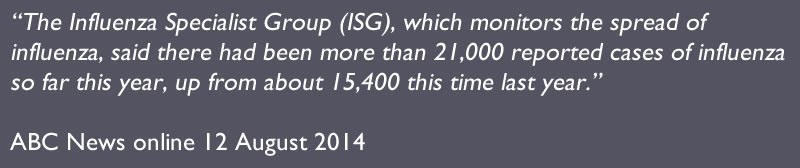
The news.com.au article has a fear-mongering feel to it, and though the public ought to be aware and informed about the severity of the virus, the language used could make the reader unnecessarily panicked – or worse – sceptical. It could leave them thinking “it can’t possibly be that bad”, having the opposite effect it set out to achieve.
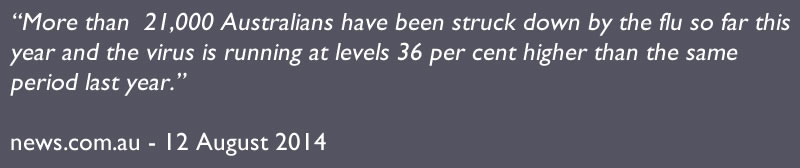
Health issues need to be reported accurately without sensational language if they are to properly inform the public and provoke a reasonable level of caution.
 Jemimah Clegg
3 responses to “Swine flu mania: how the media can freak us out, one word at a time”
Great post Jemimah – definitely something worth considering.
It’s always interesting to think about that duty the media has to keep people accurately informed during health crises, natural disasters and other emergencies. It’s not as if it’s an ‘official’ channel of information – like something released by government – it’s sort of a role that the media has taken on over the years and it’s become a convention that they have this responsibility.
The contrast between the media reporting of a health emergency say 30 or 40 years to today would just be so different. With so many voices out there these days, the facts can get lost in there.
News.com.au has of course got a duty to inform people properly…but as an online site they’re driven by the need for clicks and attention, which lends itself to sensationalising things. A perfect case study of journalism today!
Jemimah,
I really like this post. I always find it hilarious when a new health crisis is announced and every second person is concerned they have it because of a similar symptom, even if their is no case of it in our country. I don’t disagree that the media does have a responsibility to inform us of an outbreak and caution us especially if we are travelling to a particular area infected. However the way they use scare tactics is not necessary.
It is the same thing when people google search symptoms and a ‘blog’ suggests they may have cancer because they have a sore throat.
Unfortunately a lot of journalists are not medical professionals and no I’m not saying they have to be but the way they research and put together a report needs to be done with care. It could be an informative notice rather than a scary warning.
Such a valid post Jemimah.
Often reading certain news articles nowadays I feel as though growing trends of melodramatic entertainment influence the way some news is presented aiming to encourage more readers. I agree with your opinion in that headlines such as health issues should not be toyed with through use of provocative wording resulting in terror from readers. Awareness and concern on the issue at hand is all that is necessary.