By Jemimah Clegg, Wednesday 7 May 2014
Skeletons Rule at Fashion Week. Lean Times. Shock at the Parade of Strutting Skeletons.
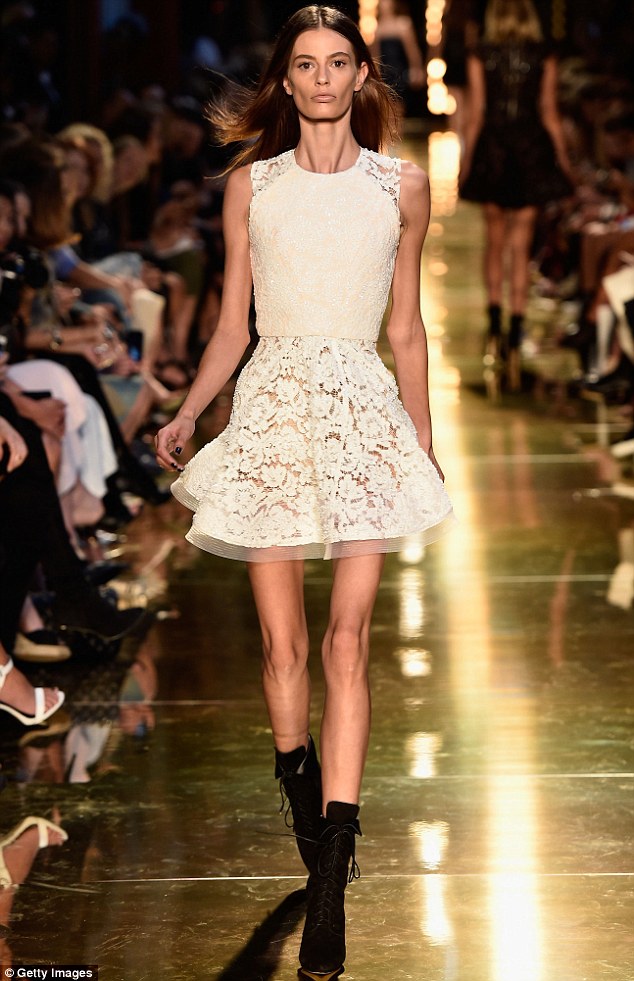
These are all headlines from stories about model Cassi Van Den Dungen looking ‘too skinny’ in Alex Perry’s show at Australian Fashion Week earlier this year.
Dungen’s appearance in Alex Perry’s show was widely debated across the media, after Perry appeared on Chanel Nine’s Today and agreed Dungen was too thin.
The title Hunger Games appeared across the bottom of the screen as Perry spoke.
Mindframe’s guidelines for reporting on mental illness state:
“Mentioning a person’s mental illness in the headline or lead can sometimes sensationalise the illness and reinforce stigma. Consider alternatives where appropriate.”
The only comment reported from Dungen was via her Instagram account, where she hash-tagged “love food, I am who I am, deal with it”.
Kath Courts from The Butterfly Foundation for Eating Disorders said it would be ideal for the media in these situations to talk to the models in question.
“That conversation comes up every year at fashion week – ‘the models are too thin, what are you going to do about it?”
Courts said competition amongst media outlets means “shock tactics”, such as using graphic images of thin girls, are often used by the media to gain readers and viewers.
 “The illness is tied to what it looks like,” Courts said.
According to Mindframe, “using photos or images that unnecessarily show people with mental illness looking dishevelled or otherwise ‘different’ can perpetuate stereotypes.”
Courts said it’s often hard for the media to “do the right thing” as their viewers and readers are so intrigued by these images.
In the majority of stories about ‘too thin’ models, it is assumed that the model in question is unwell and has an eating disorder.
Marie Claire editor Jackie Frank started the debate about whether or not Dungen was unwell or just thin.
The controversy around Dungen’s fading figure kicked off after Marie Claire editor Jackie Frank was so concerned by her appearance in Perry’s show, she called her manager to ask why she was allowed to walk. “When I saw those legs I nearly died. I rang the model agent and said ‘why is that girl walking down the runway when she’s clearly not healthy?” Frank said. – The Daily Telegraph, April 9, 2014
Mindframe encourages journalists to confirm with reliable sources whether or not a person has a mental illness.
Dungen’s health was put to her agent Helena Vitolins, who categorically denied that Dungen was unhealthy.
The Australian reported:
“Helena Vitolins from Work Agency, which represents Cassi, told ninemsn’s TheFIX that the fuss was a “witch hunt” on a girl “who finds it hard to put on weight.”
The question in this instance is whether the fashion industry turned a blind-eye to the health of particularly skinny models, but it could be argued that once an official source dispelled the rumours of Dungen’s illness, the media should have backed off.
Macedon Ranges Leader reporter Barry Kennedy’s article Gisborne mums form new support group for families battling mental illness, detailed some of the experiences of Tamara Wilson’s daughter, who suffered from anorexia.
Kennedy said Ms Wilson was happy to give specific information, as she was trying to raise awareness of her support group Parents, Siblings – My Family Matters.
He said if he were writing a feature article, he would have discussed her daughter’s condition in more detail.
There were still specific references in his story about how Ms Wilson’s daughter lost 20kg in three months, and the fact that she is “afraid of food”.
Kennedy said it’s important when dealing with sensitive issues to go back to the person involved and make them aware of what you’re going to print.
“When you’re reporting stuff and not going back to the source – that’s the start of your problems,” Kennedy said.
Mindframe’s guidelines state that care should be taken when identifying people with mental illnesses, and Kennedy ensured that care was taken in his article.
He said Ms Wilson’s daughter was initially happy to have her name published, but then decided she was uncomfortable with that. Her name was not printed
The Age journalist Chris Johnston said journalists are taking a new approach in reporting issues of metal health.
He said until more recently, it was thought that reporting on issues of mental illness could make it worse for those suffering in the community.
“Having reported stories around mental health and stuff for a long while, I guess my philosophical start point was it’s better for vulnerable people to speak rather than not,” Johnston said.
Mindframe’s guidelines said reporting stories about, and people’s experiences with, mental illness can reduce stigma.
Kennedy said his article Gisborne mums form new support group for families battling mental illness got a huge amount of interest on social media.
“It was an unprecedented amount of interest – obviously people want to know more about this issue,” Kennedy said.
He said there is a line between sensitively covering these issues and being invasive.
“When you have every media outlet trying to chase the story with so much vigour, it can sometimes be detrimental to those involved,” Kennedy said.
Johnston said if you know for a fact that someone is suffering from a mental illness, it’s usually OK to report it without worrying about the stigma surrounding it.
“If you consider it in your professional opinion to be highly relevant to the story – buggar the stigma.”
Courts said the media is getting better at following guidelines for reporting on eating disorders.
“Mamamia has taken advice from Mindframe and made an effort to report on eating disorders responsibly,” Ms Courts said.
My mother, her bulimia and me, published on Mamamia on 29 April, was a personal account from a young girl whose mother suffered with, and died from bulimia.
The article contained details of her mother’s behaviour, including the ‘high’ she got when purging her food and the “sharp bones of her back, her ribcage.”
At the beginning of the article there is a disclaimer that states:
Trigger Warning: This story contains a graphic portrayal of my mother’s struggle with anorexia nervosa. If you are currently struggling, or are recovered, you may find elements of this story triggering. Reader discretion is advised.
But it’s up to the readers to control themselves, which may not be something they can do if they are suffering from an eating disorder.
Courts said ‘tell all’ articles can be dangerous, and are from the perspective of someone who is often not in the media, and therefore does not know the guidelines around reporting eating disorders.
“Sharing behaviours, like how much they had to eat, how much they exercised and how much weight they lost, can be really unhelpful,” Courts said.
She said that the editors who are publishing these articles do know the guidelines, and should be more responsible.
“It’s quite difficult for them to get the balance right,” Courts said.
Mindframe encourages the media to give information for support groups, such as The Butterfly Foundation, at the end of stories that report mental health issues such as eating disorders.
Kennedy agrees this should be standard practice.
“When you start wading into reporting in these areas, you need to provide information to support groups like Lifeline etcetera,” Kennedy said.
“The person suffering second guesses everything they do – they have a constant monkey on their back.”
Courts said eating disorders are an “illness attached to a negative stereotype,” and the media should be more aware of how real people with these diseases are affected.
 Jemimah Clegg