Published on Brown Paper for Bessie on Monday 11 March 2013
Australia’s per capita greenhouse gas emissions are high, but they needn’t be. Brown Paper for Bessie editor JEMIMAH CLEGG gets serious about C02…
You keep a clean house. You vacuum. You do the dishes. You wipe down surfaces. You dust. You wash. You fold. You scrub. But is your house really clean?
No I’m not talking about hidden dust mites in your bedding (though that’s something to be mindful of). I’m talking about clean energy. Fewer emissions. Less consumption. Environmental, hippie, greenie stuff…you know?
Australia’s CO2 emissions are approximately 18.15 tonnes per person, per year. That’s compared with 8.95 in the UK, 10.4 in Japan and 4.59 in China. Obviously Australia’s manufacturing and mining industries are impacting on this figure…but Japan and China both have large manufacturing industries.
“But China’s not a developed country”, I hear you say. True. But they are developing. So should they also be aiming for a whopping 18.15 tonnes per person per year?
The fact is we can make small changes in our lifestyles and the way we run our households to bring this figure down. How many times have you had that conversation with someone who’s just come back from the USA… “Everything’s huge! They eat sooo much. The cars are gigantic. The people are gigantic!”
We are catching up to the US at a rapid speed. Their C02 emissions are currently at 19.22 tonnes per person per year.
So how do we reduce our emissions? It’s not really that hard. If we all followed these few steps we could be on our way…and these aren’t even the extreme ones. Just some simple stuff we can all do to keep our houses clean and green.
RECYCLE…
Simple right? But for some reason we don’t all do it, and if we do, we don’t necessarily do it properly. In the year between 2006 and 2007, Australians recycled at a rate of 52%. This figure varied state by state, territory by territory, with the ACT winning at over 70%, while WA fell drastically behind; only recycling one third of all waste in the state.
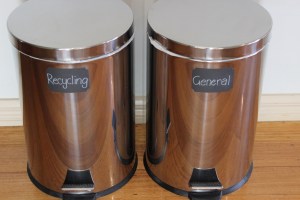
Waste that isn’t recycled goes into landfill, and this contributes largely to emissions. Australia’s landfill waste is increasing steadily, as are our C02 emissions.
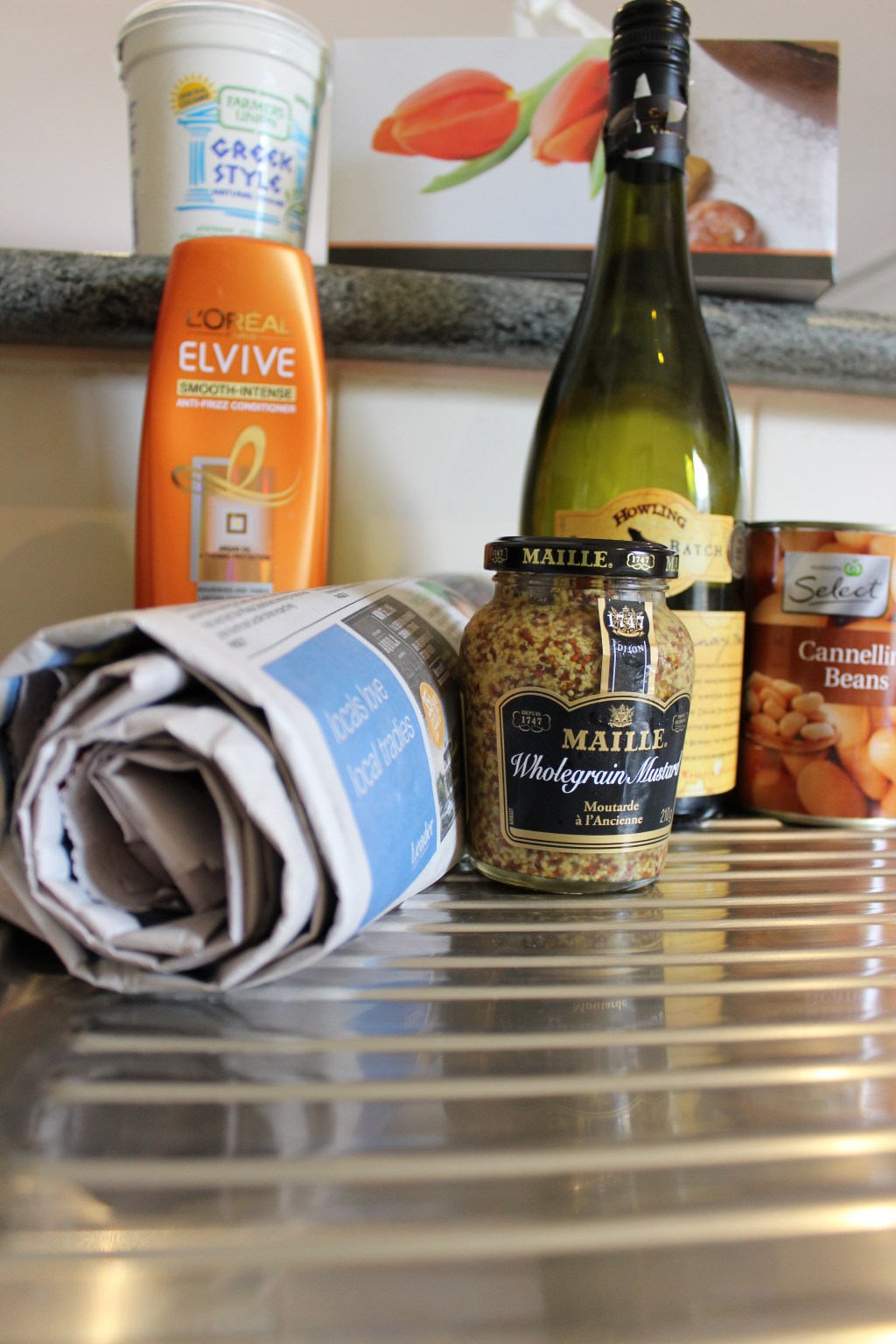
Here’s the stuff you can put into your normal, yellow-topped, gets-picked-up-every-fortnight recycling bin:
Glass, paper, cardboard, aluminium, steel and plastic…but not all plastic. This is important, so I’ll say it again – not all plastic.
Plastic is coded in relation to what type of plastic it is. Most councils only want plastic that is coded 1, 2 or 3 in your recycling bin.
This includes things like shampoo bottles, milk and other drink bottles, ice-cream and yoghurt containers and detergent bottles.
Other types of plastic usually cannot be recycled by just putting them in the bin out front. Plastic bags, for example, should not go in your recycling bin. Most super markets will take them back to be recycled.
Check on the website of your local council for variations on the plastics they will accept.
All items going into your recycling bin should be loose – not in bin bags. If you feel you want a bin bag in your indoor recycling bin, don’t tie it up before you take it outside.
Tip the contents into your outdoor recycling bin and then put the bin bag in your general rubbish. If you buy biodegradable bin bags then there is no problem with putting them in the general rubbish.
CONSUME LESS
Of everything; food, appliances, clothes, nick-nacks and stuff. Think about all the stuff you really need to live. It isn’t much, is it?
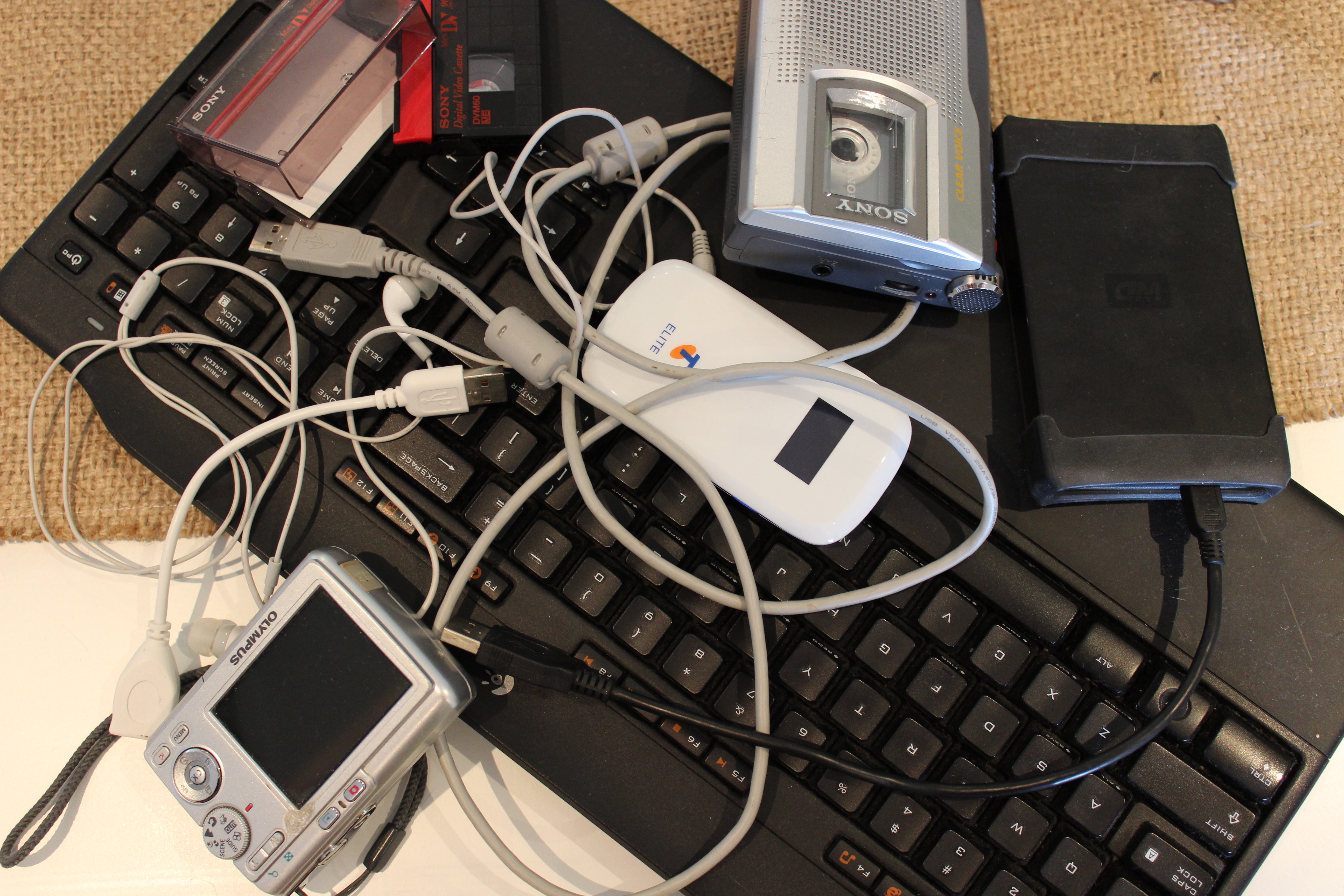
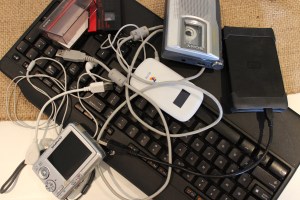
In 2007-2008, Australians bought 31.7 million new TVs, computers and other computer-y things. We are obsessed with new technology, so when the new stuff comes in, the old stuff goes out. 16.8 million items were thrown out in the same year, and 88% of it went into landfill.
There are ways to recycle these sorts of items so the parts can be reused. But what about holding onto that perfectly good phone for another year rather than rushing out to get the new one that has one slightly different feature? Will it impact on your life that much?
I know stuff is fun, stuff is nice…I’m all for stuff, but just try to collect less of it. Or better yet get vintage stuff – that way it’s already there ready to be used, and less likely to end up in landfill.
GROW YOUR OWN…
Herbs, veggies, fruit. It’s so great to be able to walk out to your garden and grab what you need. It cuts down on all sorts of environmental impacts like transport, processing and wastage.
If it comes from your own garden, you’re likely to only use what you need, rather than stocking the fridge with fruit and veg that won’t get eaten. By the end of the week it’s still there, looking all limp and squishy so you chuck it, and think “What a waste.” You’re right.
SAY NO TO PLASTIC BAGS…
But don’t keep buying more green ones. It really defeats the purpose. Take the ones you already have to the supermarket.
“Really?” you say, “What a novel idea!” The hint of sarcasm in your voice has not gotten past me.
But people don’t take them. They forget, they go straight from work to the shop and don’t have them in the car. And supermarkets love to sell you them, at up to $2.99 a pop, why wouldn’t they?
So put some in the car, put some by the door and when in doubt remember this song:
DON’T DRIVE…
OK so I don’t mean ever. But when you don’t have to, try not to. And even better, try to share one car with your partner. If you live in a city with good public transport, and particularly if you live in the inner-city, this really is doable. My husband and I do it.
If you have to drive everywhere, which I know in Australia this can be the case, go for a fuel efficient vehicle when you next upgrade. This will not only help the atmosphere…but your bank balance.
BE A TURN OFF…
Lights, switches, buttons and appliances you’re not using.
If you’re like me, you know you’re meant to turn off the TV power at the outlet, but it’s all hidden behind the cabinet and it’s a pain to get at it. Get one of those energy saving adapters, it will cut the power for you and it has a convenient little button that can be pushed when you want the power back on.
It’s sunny most of the time in this country right? So don’t use the dryer when you can hang it on the line. Clothes dryers can emit up to 3kg of greenhouse gas per load, not to mention what they add to your power bill.
With all your appliances, research ones that are the most energy efficient. It will cut back on emissions and your spending.
These are just a few things we can all do. Of course solar panels, water tanks, composting, becoming a vegetarian and even choosing not to have a second or third child are other things that help…but some of these are obviously more extreme measures.
Everything in moderation is a good rule. The next time you want a new flim-flam or do-dad, just think about whether your old one will last you a bit longer. What’s that saying we all learnt in school… Reduce, Re-use, Recycle? That pretty much sums it up!
Words & Photographs by Jemimah Clegg
 Jemimah Clegg